
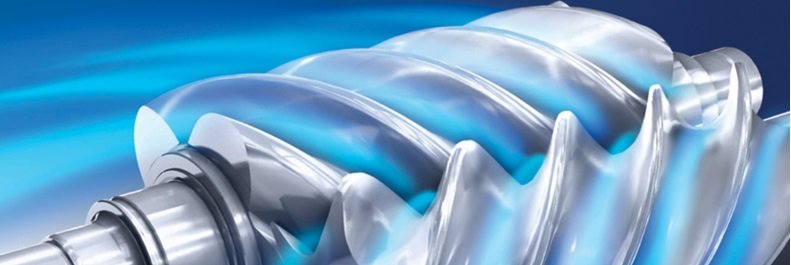
Compressed air is air kept under a pressure that is greater than atmospheric pressure. Often referred to as the "fourth utility" after electricity, water, and natural gas, it powers a vast range of industrial, commercial, and everyday applications.
How Compressed Air Works:
Air from the atmosphere is mechanically forced into a smaller volume. This process traps the air molecules in a restricted space, increasing their kinetic energy and pressure.
# Intake: Ambient air is drawn into the compressor through a filter.
# Compression: A mechanism (like pistons or screws) reduces the volume of the space containing the air.
# Storage: The high-pressure air is moved to a receiver tank to equalize pressure fluctuations.
# Treatment: The air is filtered and dried to remove water vapor, oil, and contaminants before use.
Key Industrial and Everyday Applications:
Compressed air is prized for its safety, flexibility, and high power-to-weight ratio. Some of the applications are given below :
1. Manufacturing & Automation: Powers pneumatic tools (drills, grinders), robotic assembly lines, and clamping systems.
2. Energy & Infrastructure: Used in pneumatic control systems, sandblasting, and operating heavy construction equipment.
3. Transportation: Powers air brake systems in large trucks and trains, and inflates tires.
4. Healthcare & Food: High-purity compressed air breathes life into ventilators, drives dental drills, and safely packages food without contamination.
Comparing Compressor Types:
The two primary categories of air compressors are
(i) Positive Displacement (trapping and reducing air volume)
(ii) Dynamic (speeding up air and slowing it down to build pressure).
Rotary Screw: Two interlocking screws trap and compress air continuously. Large-scale, continuous industrial operations.100% duty cycle; highly reliable.
Reciprocating (Piston): A piston moves down to draw air in and up to compress it. Small workshops, intermittent DIY tasks. High pressure capability; cost-effective.
Centrifugal: An impeller spins rapidly to accelerate air, converting velocity into pressure. Massive manufacturing, chemical plants, refineries. High volume output; oil-free delivery.